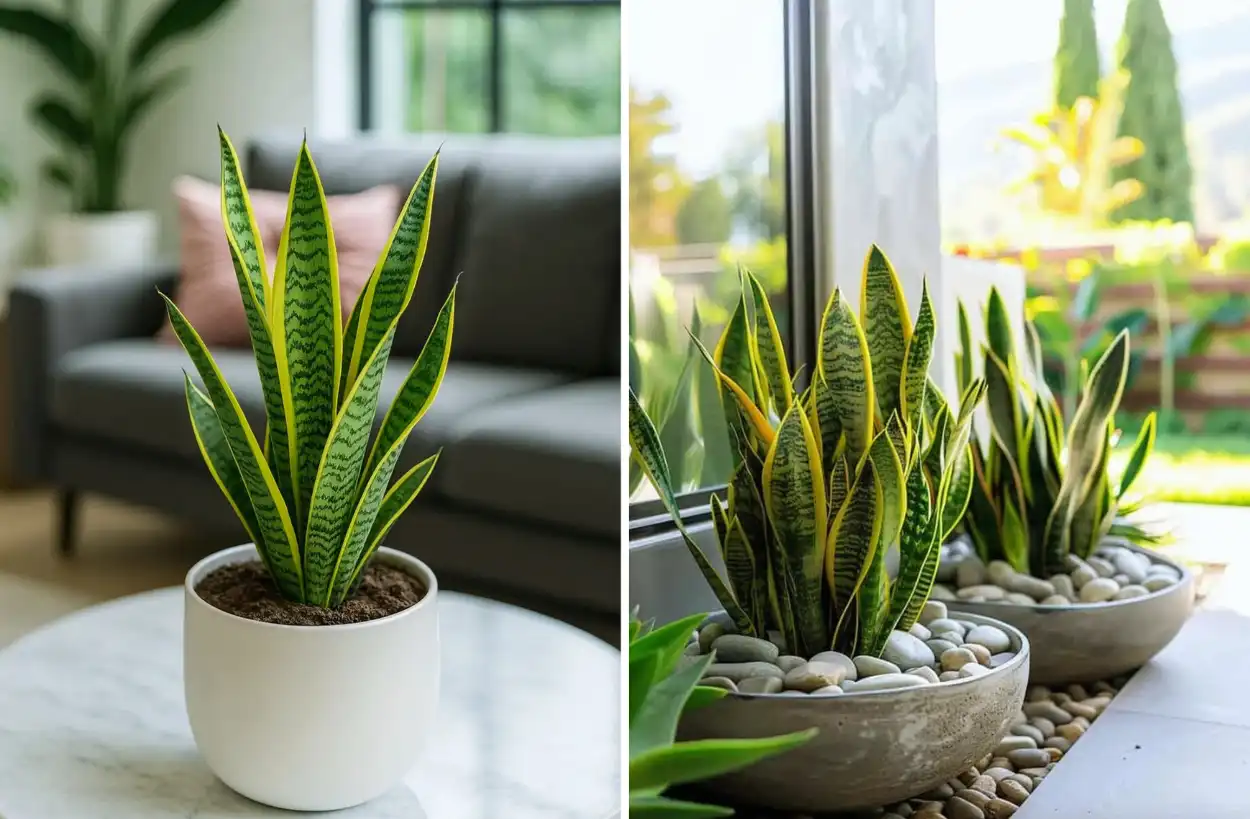
Snake plants are one of those houseplants that seem almost determined to make more of themselves. Once a plant is mature and healthy, you can take a leaf, cut it into sections, and use those pieces to grow new plants.
The process is pretty straightforward, although it isn’t particularly fast. Snake plant cuttings need some patience. You may spend quite a while looking at what appears to be a piece of leaf sitting in a pot before you finally see new growth.
Snake plants, also known as Sansevieria, are now classified as Dracaena trifasciata. They can be propagated from leaf sections, and the RHS recommends taking these cuttings in spring to early summer for the best results.
The nice thing is that you don’t need a special propagation setup. A healthy leaf, a sharp pair of scissors or knife, some well-draining soil, and a little patience are enough.
| Snake Plant Profile | |
|---|---|
| Common Name | Snake plant, mother-in-law’s tongue |
| Botanical Name | Dracaena trifasciata |
| Former Botanical Name | Sansevieria trifasciata |
| Family | Asparagaceae |
| Plant Type | Evergreen succulent perennial |
| Mature Size | 2–4 ft. tall, depending on variety |
| Sun Exposure | Bright indirect light to low light |
| Soil Type | Well-draining |
| Watering | Allow soil to dry between waterings |
| Native Area | Tropical western Africa |
Can You Grow a Snake Plant From a Cutting?
Yes. And unlike some houseplants where you need a stem with a node, snake plants can be propagated from sections of a leaf.
One healthy leaf can be divided into several pieces, with each section having the potential to produce roots and eventually a new shoot. The RHS specifically recommends cutting snake plant leaves into sections around 5 cm (2 inches) long for this method.
There is one slightly annoying detail, though: you need to keep track of which end is the bottom.
Snake plant cuttings need to be planted in the same direction they were growing. If you accidentally put the top end into the soil, don’t expect it to grow normally.
How to Take Snake Plant Cuttings
The easiest method is to propagate from a single healthy leaf.
You’ll need:
- A healthy snake plant
- A clean, sharp knife or scissors
- A small pot or propagation tray
- Free-draining potting mix
- Water
That’s really it.
1. Choose a Healthy Leaf
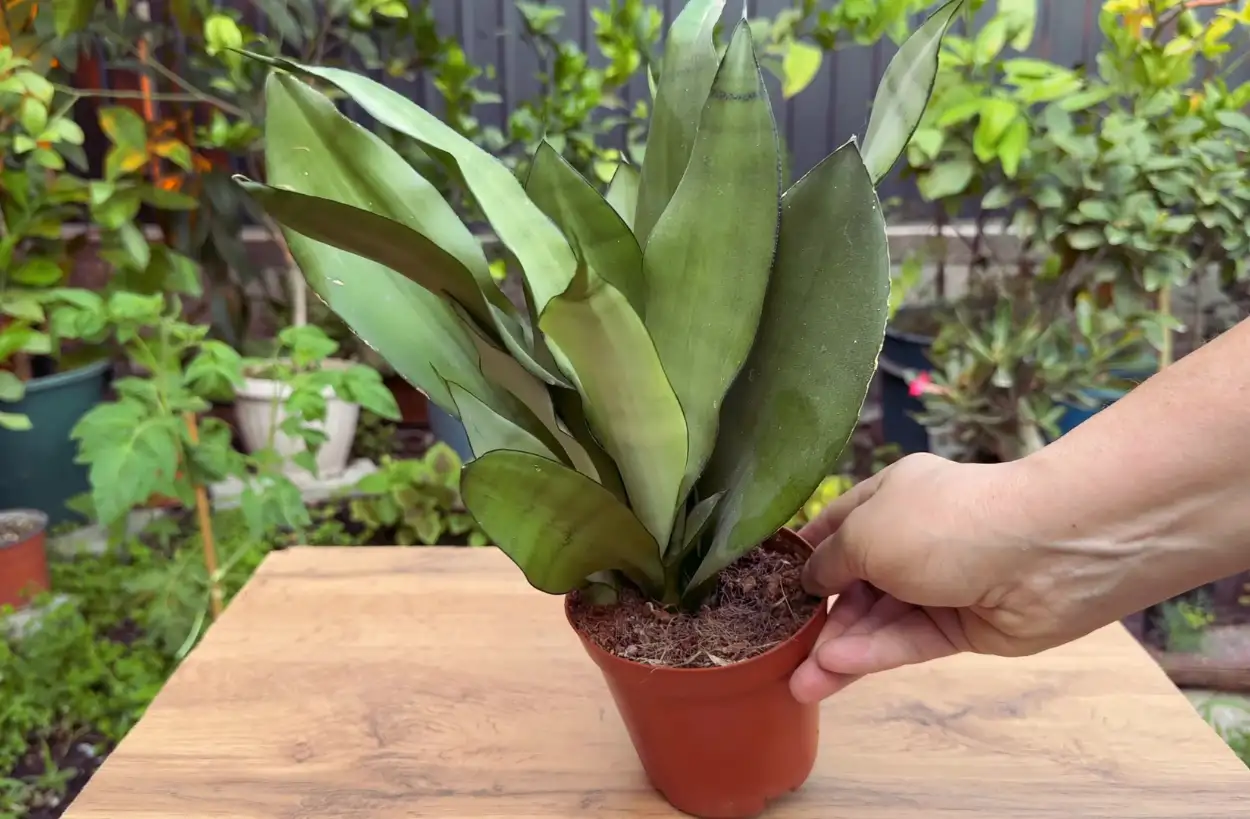
Start with a mature, healthy leaf. Avoid anything that’s already yellowing, soft, damaged, or showing signs of pests.
If the plant has plenty of leaves, you can simply choose one from the outside of the clump. There’s no reason to take several leaves unless you actually want several new plants.
Clean tools are worth using here. You don’t need anything fancy, but a dirty pair of scissors is an unnecessary way to introduce problems to a fresh cut. The RHS recommends using clean, sharp tools when taking propagation material.
2. Cut the Leaf at the Base
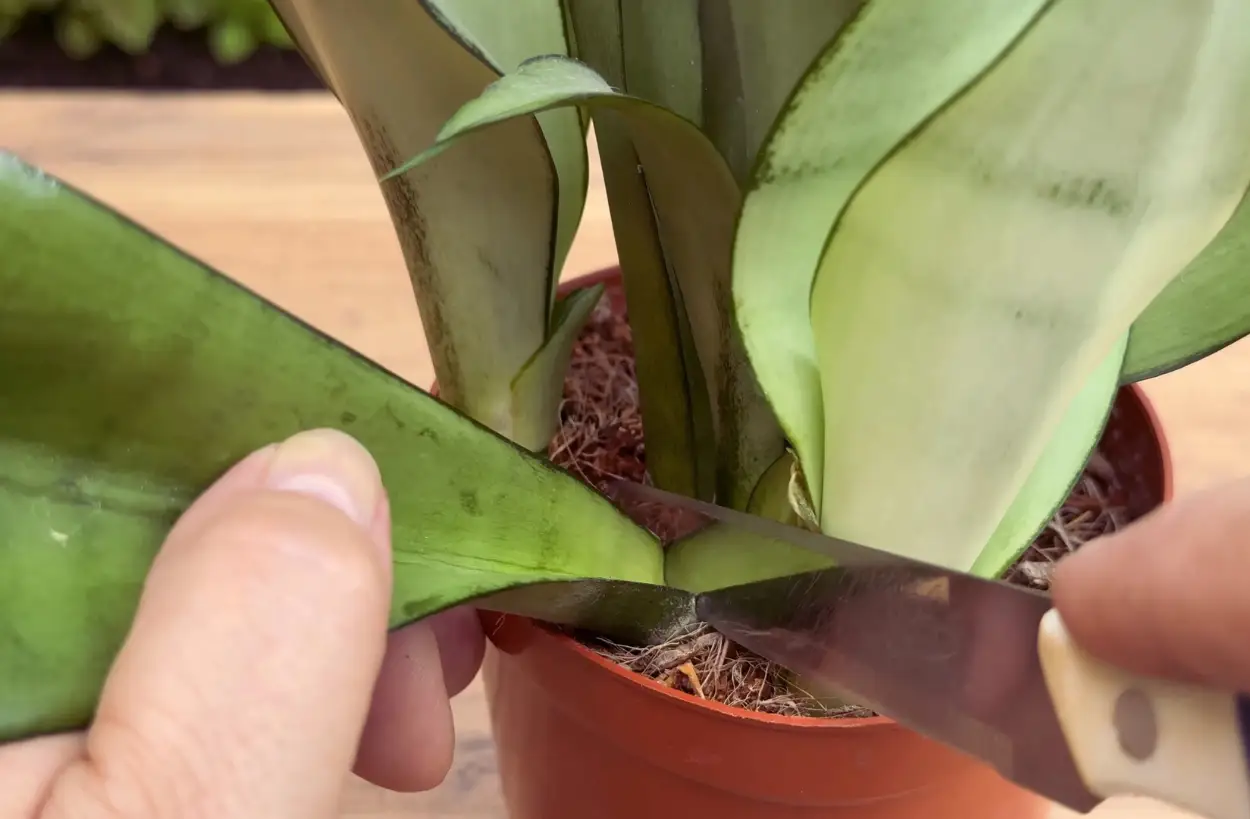
Cut the leaf as close to the soil as possible.
Make one clean cut rather than crushing or repeatedly sawing through it.
If you’ve never done this before, don’t worry too much about making the cut perfect. The important thing is starting with a healthy piece of leaf.
3. Cut the Leaf Into Sections
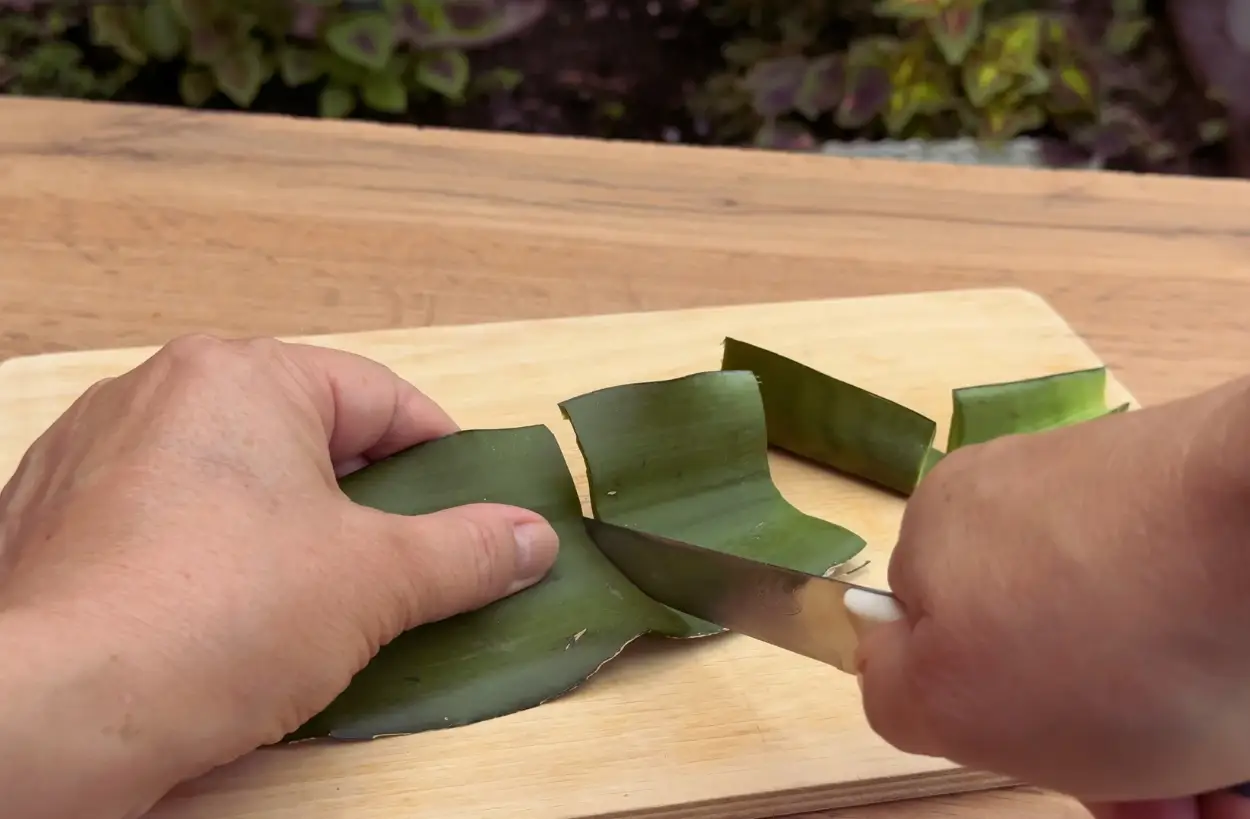
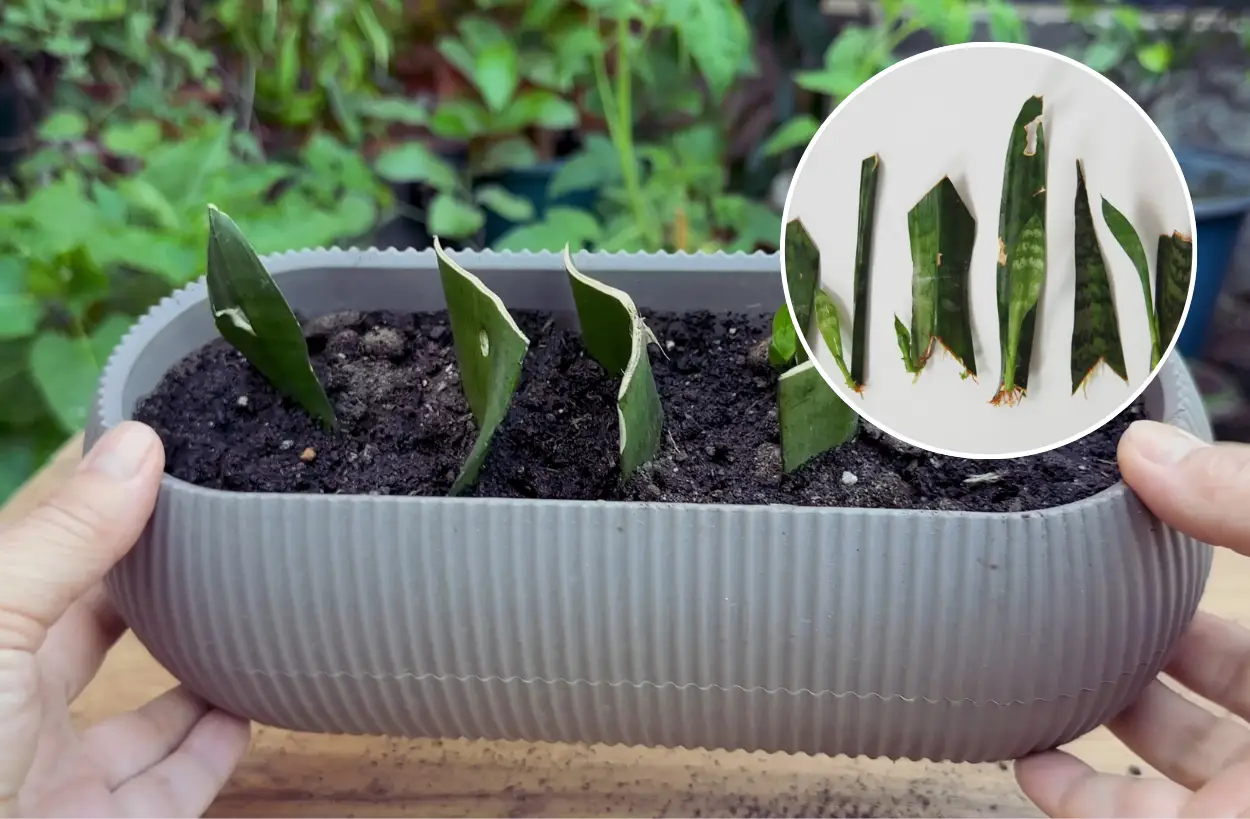
Lay the leaf flat and cut it into pieces roughly 2 inches (5 cm) long.
Before you start cutting, take a second to figure out which end of the original leaf was closest to the roots.
I like to make the bottom of each piece straight and the top slightly angled. It’s a tiny thing, but it makes it much harder to accidentally plant one upside down later.
The RHS recommends cutting Sansevieria leaves horizontally into approximately 5 cm sections and keeping them oriented in the same direction they originally grew.
4. Let the Cut Ends Dry
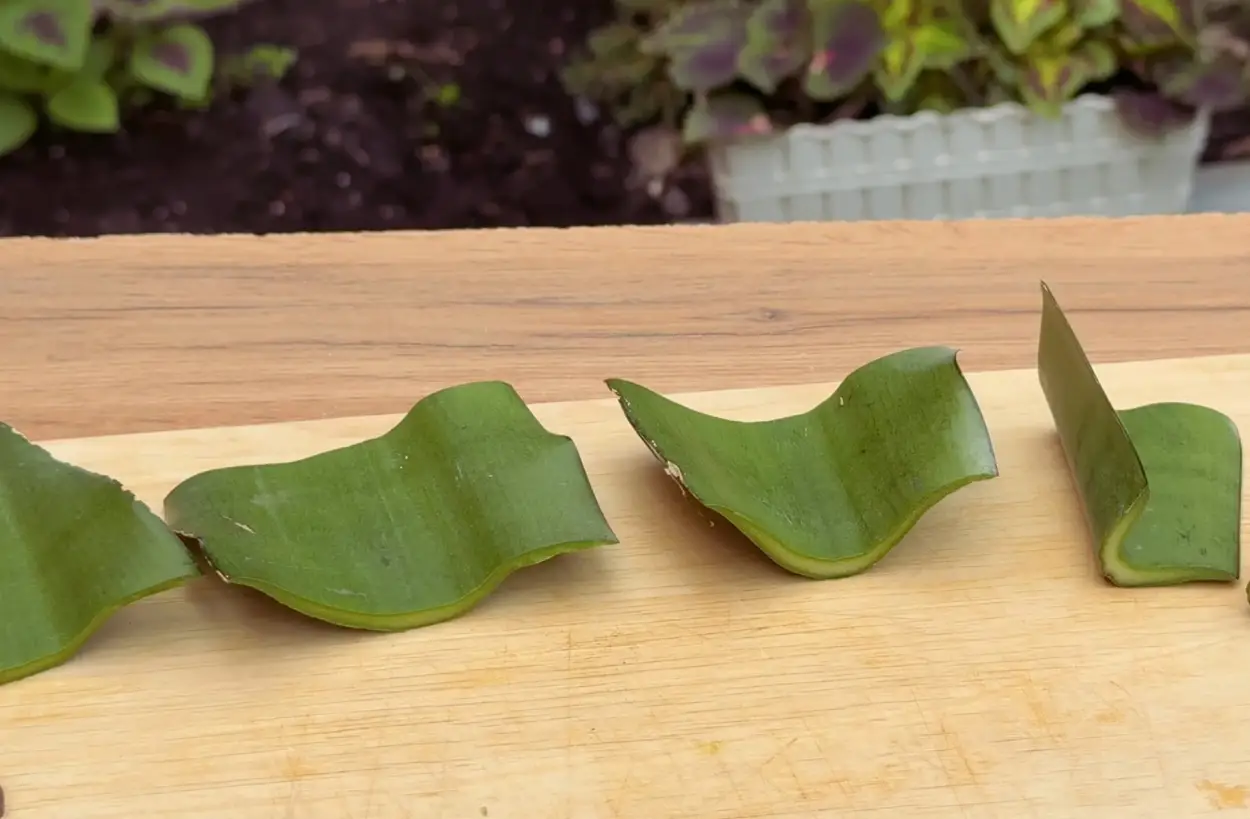
This is a step you shouldn’t rush.
Place the pieces somewhere dry and allow the freshly cut surfaces to dry and callus over for a day or two.
Snake plant leaves are thick and hold a lot of moisture, so putting freshly cut pieces straight into wet soil isn’t ideal.
The RHS specifically recommends allowing snake plant leaf sections to callus for a day or two before planting.
How to Plant Snake Plant Cuttings
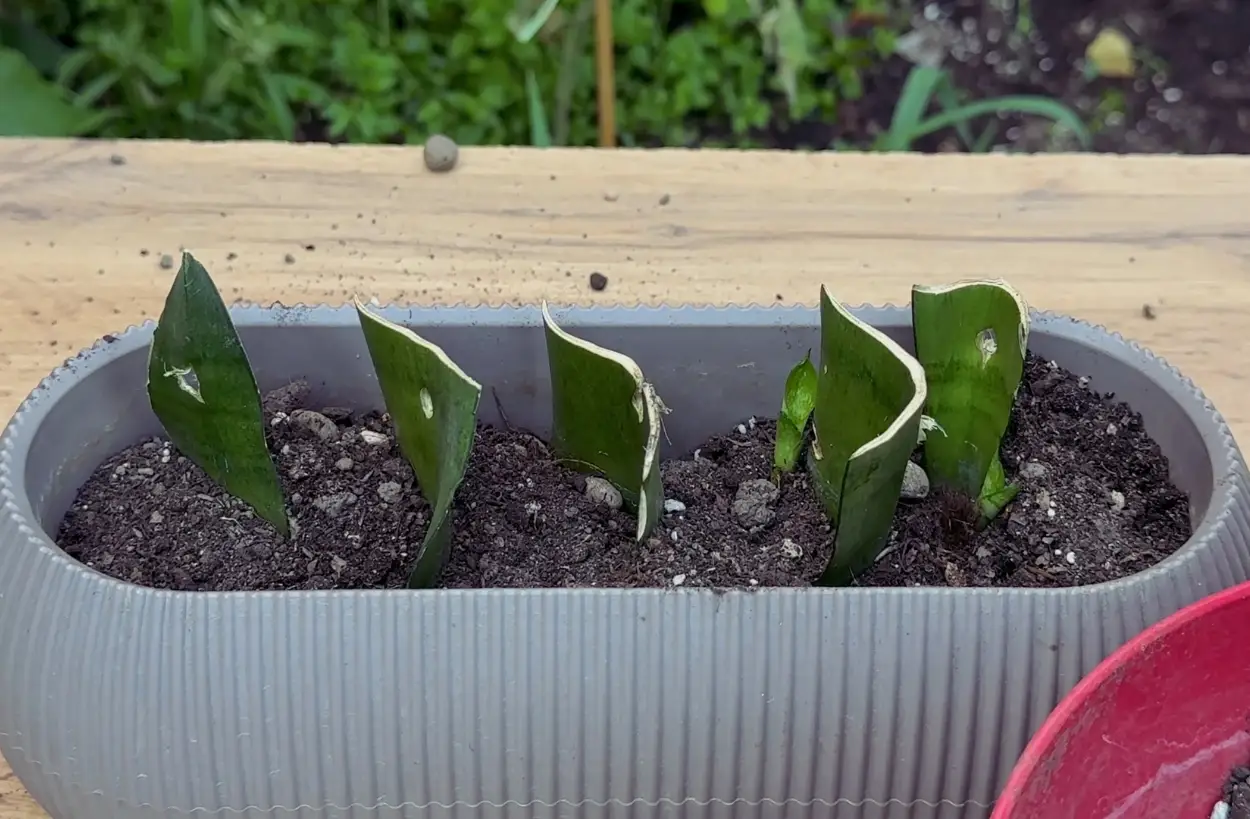
Once the cut ends have dried, they’re ready for the soil.
1. Use a Well-Draining Mix
Snake plant cuttings don’t want to sit in soggy compost.
A free-draining cutting mix works well. You can also use a cactus or succulent mix, which is generally a good fit for snake plants because it doesn’t hold onto excessive moisture.
The container should have drainage holes.
2. Plant the Bottom End Down
This is the part where your little marks or angled cuts come in handy.
Take each cutting and place the bottom end into the soil. Insert it about 2 cm (around ¾ inch) deep, just enough to hold the cutting upright.
Don’t bury half the leaf.
The RHS recommends inserting snake plant leaf sections vertically, about 2 cm deep, with the lower edge facing downward.
3. Water Lightly
Give the soil a little water after planting, then let the excess drain away.
After that, be careful.
You don’t want the potting mix constantly wet. Snake plant cuttings can rot when they’re kept too damp, so it’s better to let the mix dry somewhat between waterings than to keep reaching for the watering can.
4. Find a Bright Spot
Put the pot somewhere warm with bright, indirect light.
A bright windowsill is fine as long as the cuttings aren’t sitting in intense afternoon sunlight.
You don’t need to put the pot somewhere dark just because it’s a cutting. Good light helps the plant establish itself, but harsh direct sun can be too much.
How Long Do Snake Plant Cuttings Take to Root?
This is the part where you need a little patience.
Snake plants are not particularly fast growers, and propagation can take time. Don’t be surprised if you don’t see anything happening for a while.
First, the cutting needs to produce roots. Then, eventually, you’ll see a new shoot emerging from the base.
So if you’ve planted your cuttings and two weeks later you’re staring at the pot wondering whether anything is happening, leave them alone.
Don’t keep pulling the cuttings out to check for roots. It’s very easy to damage whatever is developing underground.
Once the new shoots are established and growing, the young plants can be separated and potted individually.
How Often Should You Water Snake Plant Cuttings?
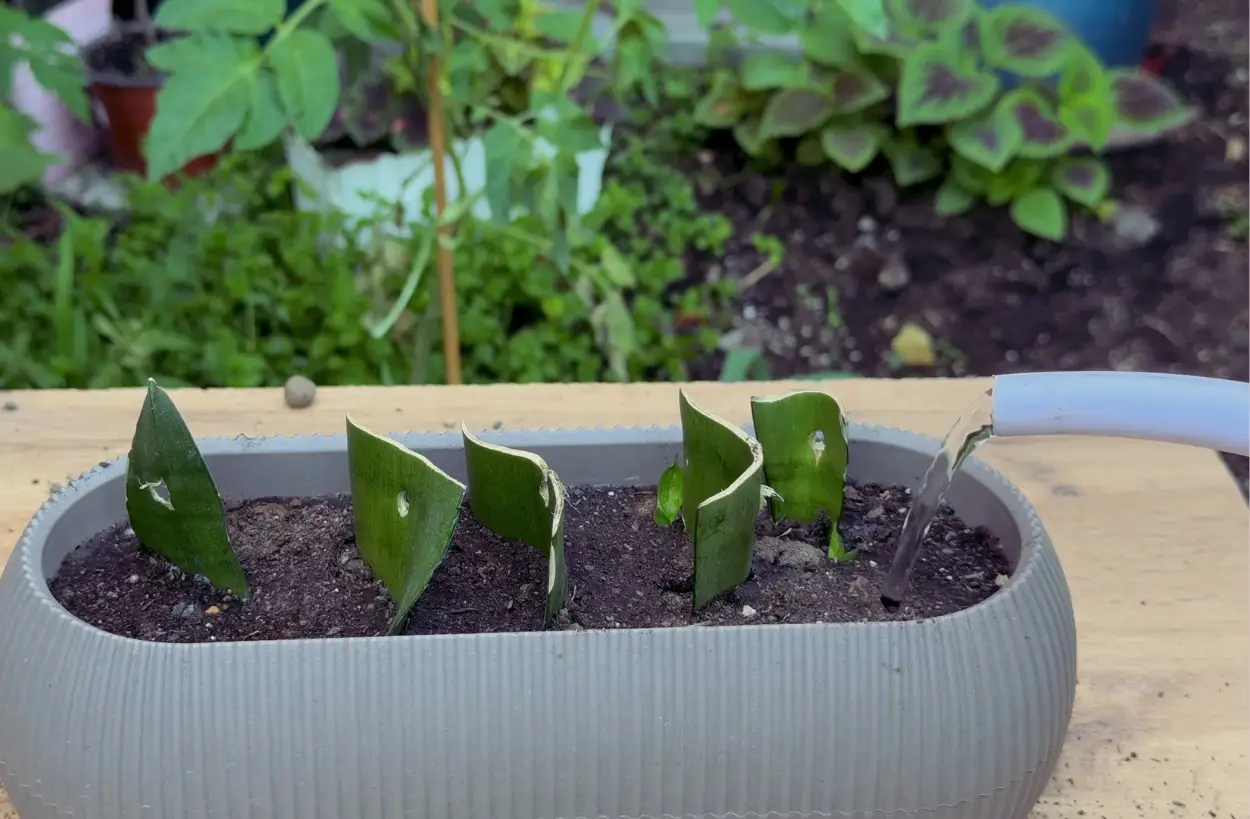
This is one of the easiest parts to get wrong.
The soil should be slightly moist after planting, but never soggy. After that, water carefully as the mix begins to dry.
You don’t want the cuttings sitting in wet soil for days at a time. The RHS specifically warns that leaf cuttings can rot if the compost is too wet.
If you’re unsure, it’s usually better to wait another day than to add more water.
Once the new plant is established, you can gradually move toward the much drier watering routine that mature snake plants prefer.
Propagating a Variegated Snake Plant
Here’s something worth knowing before you grab a leaf from your favorite variegated snake plant.
Leaf cuttings don’t reliably preserve variegation.
For example, a snake plant with yellow-edged leaves can produce plain green plants when propagated from leaf sections. This happens because the variegation in these cultivars is associated with a genetic chimera, and the leaf cutting doesn’t necessarily retain the same arrangement of tissues.
So if you have a beautiful variegated plant and want the babies to look like the parent, division is the better option.
If you’re happy with green plants, though, leaf propagation is perfectly fine.
How to Propagate a Snake Plant by Division
Division is particularly useful when your snake plant has already produced several pups around the base.
Instead of cutting up a leaf, you separate a young plant from the main clump, making sure it has its own roots attached.
It’s also the method I’d choose for keeping the characteristics of a variegated cultivar.
To do it:
- Take the plant out of its pot.
- Gently remove enough soil to see where the smaller shoots connect to the main plant.
- Find an offset with its own roots.
- Separate it carefully from the parent plant.
- Plant the new section in a small pot with well-draining soil.
- Put it somewhere with bright, indirect light.
- Water it lightly and let the soil dry between waterings.
It may look a little rough immediately after being divided, but give it some time. Once the roots settle in, the new plant should start producing fresh growth.
Common Problems With Snake Plant Cuttings
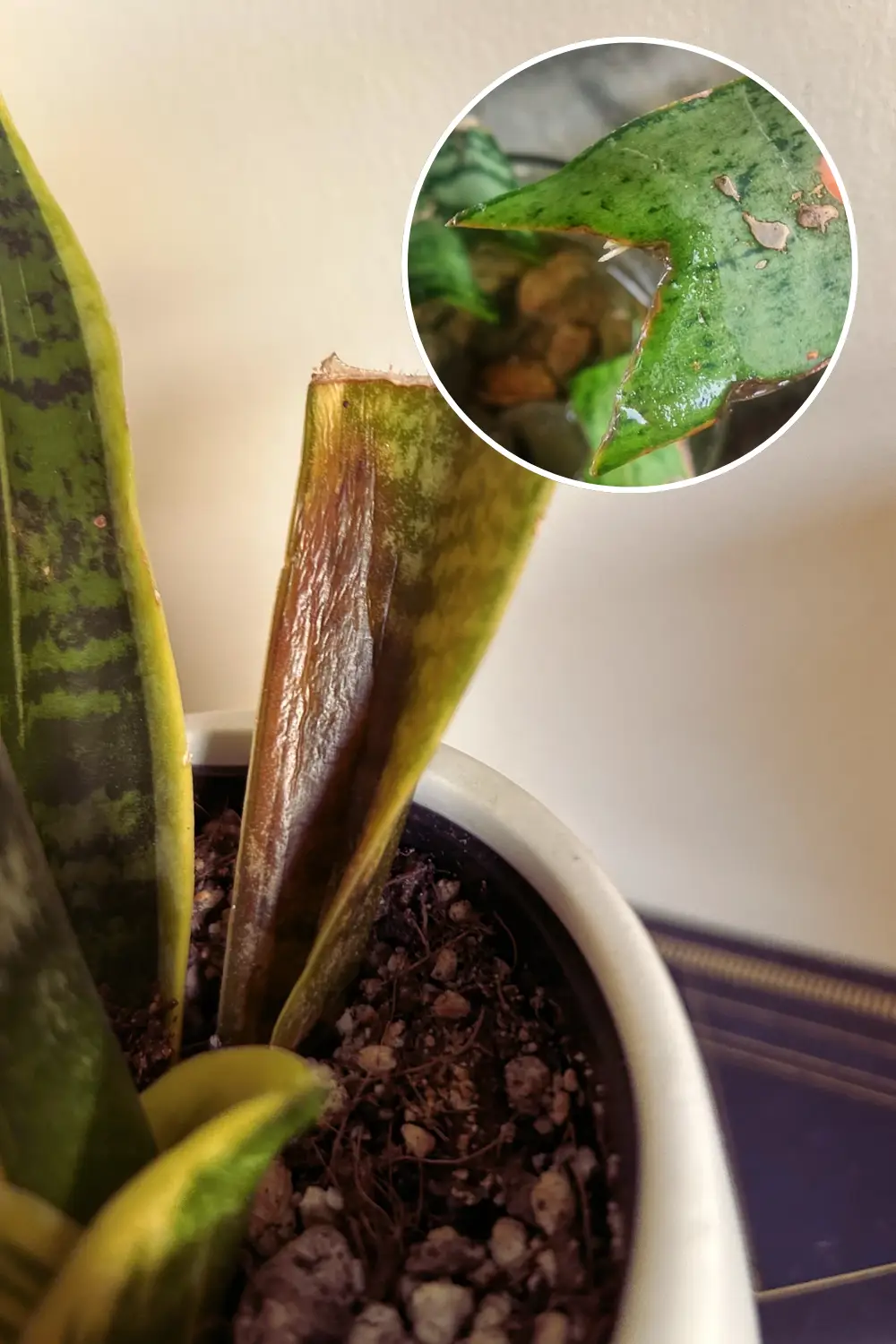
The Cuttings Are Turning Soft
If the bottom of a cutting is becoming soft, dark, or mushy, there’s a good chance it has been kept too wet.
Take a look at the soil. If it’s constantly damp, that’s probably the first thing I’d change.
Snake plant leaf cuttings are particularly vulnerable to rotting when the growing medium is too wet.
The Cuttings Look Exactly the Same
Honestly, this can be completely normal.
Snake plants are slow. A cutting can sit there looking exactly the same for quite a while before anything exciting happens underneath the soil.
If the leaf is still firm and healthy, don’t give up on it just yet.
The Cutting Is Shriveling
Some wrinkling isn’t necessarily a problem. Snake plant leaves naturally store water.
If the cutting is becoming extremely thin and dry, though, check the soil and the growing conditions. Make sure it isn’t sitting somewhere extremely hot and that it isn’t being left completely dry for extended periods.
My Variegated Cutting Grew Green
Unfortunately, that’s common.
If the parent plant was variegated, a leaf cutting may produce an entirely green plant. This is one of the main disadvantages of propagating variegated snake plants from leaves.
If you want to preserve the variegation, use division instead.
A Few Things That Make Snake Plant Propagation Easier
You really don’t need to turn this into a complicated propagation project.
- Use a healthy leaf.
- Keep your tools clean.
- Remember which end is the bottom.
- Don’t keep the soil soaking wet.
- Give the cuttings good indirect light.
- And, most importantly, give them time.
Snake plants are wonderfully forgiving once they’re established, but they’re not going to reward you with new leaves overnight.
The good news is that once you get the first few cuttings going, you may find yourself with more snake plants than you actually have room for.